Why Knee Pain Is Not Always Just a Knee Problem
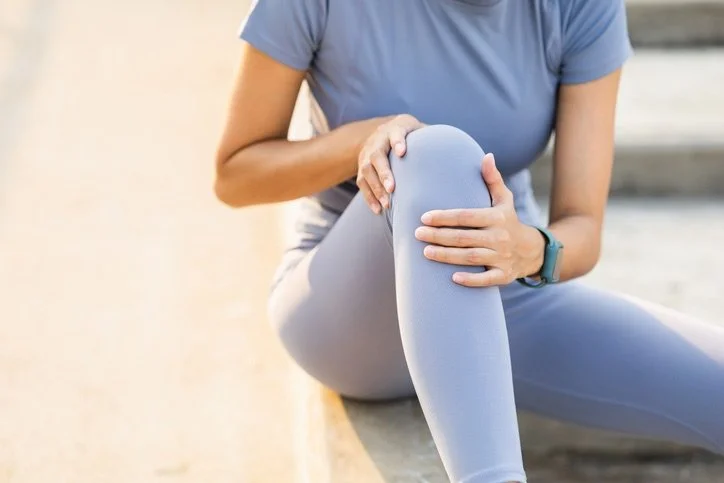
Knee pain can be one of the more confusing things to deal with in your body. You did not necessarily do anything dramatic to injure it. Maybe it started as occasional soreness after a run, stiffness when you stand up from a chair, or an ache that shows up on stairs and then lingers longer than it should. You rest it, ice it, maybe try a brace or some targeted exercises, and it feels better for a while. Then it comes back. Sometimes in the same spot, sometimes slightly different, but always with that familiar sense that something is just not quite right.
At Hannah Sprung Rolfing LA in Marina Del Rey, CA, knee pain is something Hannah approaches from a whole-body perspective, because the knee is one of the most responsive joints in the body to what is happening above and below it. People come in from Marina Del Rey, Venice, Culver City, West Los Angeles, and surrounding Westside communities looking for knee pain relief that actually addresses why the knee keeps struggling in the first place. Through Rolfing® and Structural Integration, Hannah helps people understand the larger movement patterns that may be contributing to their knee discomfort and find a more lasting way forward.
Why the Knee Is Often a Messenger, Not the Source
The knee is a hinge joint. It is designed primarily to flex and extend, with a small amount of rotation built in. What it is not designed to do is manage excessive rotational force, absorb load that the hips and ankles are not sharing well, or compensate for restricted movement above or below it. But that is exactly what happens when the rest of the body is not moving efficiently.
If the hips are tight or restricted, the knee often picks up the rotational demand the hip is not handling. If the ankle and foot are not moving well, the knee may absorb shock that would otherwise be distributed more evenly through the chain. If the pelvis is tilted or uneven, one knee may be under more load than the other over thousands of steps and repetitions. Over time, that added demand can create irritation, inflammation, and pain in a joint that was simply doing its best to keep things moving.
This is why treating the knee alone, while sometimes necessary, does not always resolve recurring knee pain. If the conditions that created the strain remain unchanged, the same patterns tend to reassert themselves. A whole-body approach asks a more useful question: what is the knee being asked to compensate for, and where else does the body need more support or freedom?
The Role of the Hips, Pelvis, and Feet
At Hannah Sprung Rolfing LA, working with knee pain almost always involves looking at what is happening in the hips, pelvis, and lower leg as well. These areas are the knee's closest neighbors in the movement chain, and their relationship to the knee is direct and constant.
Tight hip flexors and restricted hip rotation are among the most common contributors to knee strain. When the hip cannot rotate or extend freely, the knee is often asked to absorb that movement instead. Similarly, when the IT band is chronically tense, when the inner thigh muscles are underactive, or when the gluteal muscles are not contributing well to hip stability, the knee ends up managing forces it was not designed to handle on its own.
Below the knee, the ankle and foot play an equally important role. Collapsed arches, limited ankle mobility, or habitual patterns of pronation or supination can all change the angle of force traveling up through the knee. Over time, even small misalignments in how the foot meets the ground can have a meaningful impact on how the knee feels mile after mile and step after step.
Fascia connects all of these areas into a continuous system. The connective tissue running from the foot through the leg, hip, and pelvis does not recognize the neat anatomical boundaries we use to name body parts. When one part of that system is restricted or overloaded, the tension is distributed throughout, and the knee often ends up in the middle of it.
How Rolfing® May Help Knee Pain
At Hannah Sprung Rolfing LA in Marina Del Rey, sessions focused on knee pain look at the whole lower body and how it is relating to gravity and movement. Hannah begins with an assessment of posture, alignment, and gait to understand where the body may be compensating and how that compensation is affecting the knee. She then works with the fascia and connective tissue through the hips, pelvis, thigh, lower leg, and foot using pressure that can range from light to deeper depending on what each area needs and is ready for.
The goal is to help the body distribute load more evenly, so the knee is no longer the area absorbing more than its share. When the hips move more freely, the pelvis is better supported, and the lower leg is more balanced, the knee often has significantly less strain to manage. For many people seeking knee pain relief in Marina Del Rey, CA, that shift in how the whole system is working can make a real difference in how the knee feels during activity and at rest.
Hannah may also bring attention to movement patterns and body awareness during sessions, helping clients notice how they are using their body in everyday tasks like walking, standing, climbing stairs, or getting up from the floor. Small changes in how the whole body moves can have a meaningful cumulative effect on how much demand the knee is absorbing day to day.
Who This May Be a Good Fit For
A whole-body approach to knee pain tends to resonate with people whose knee discomfort feels connected to movement, activity, or a pattern that keeps repeating. It may be worth exploring if you:
Experience recurring knee pain, stiffness, or soreness that keeps coming back
Notice the pain is worse after prolonged sitting, walking, running, or stairs
Have been told your knee pain may be related to how you move or how your hips and feet are working
Are an athlete dealing with overuse patterns, training load, or injury recovery
Feel tightness or restriction in the hips, IT band, or lower leg alongside your knee pain
Have tried rest, stretching, or targeted knee exercises without lasting relief
Clients come to Hannah Sprung Rolfing LA from Marina Del Rey, Playa del Rey, Playa Vista, Santa Monica, Culver City, and throughout the greater Los Angeles area looking for a more complete approach to knee pain and movement.
Why a Whole-Body Approach Matters
The knee does not exist in isolation. Every step you take involves a coordinated effort from the foot, ankle, knee, hip, pelvis, and spine. When that coordination breaks down somewhere in the chain, the knee is often the first place to feel it loudly. That is not a flaw in the knee. It is useful information about where the body needs more support, more mobility, or a better relationship between its parts.
This is why the Rolfing Ten-Series® can be especially valuable for people with recurring knee pain. The Ten-Series works through the entire body in a progressive sequence, building support from the ground up and addressing the patterns throughout the lower body, pelvis, and spine that influence how the knee functions. Rather than continuing to manage the same discomfort, the goal is to help the body find a new baseline where movement is more efficient, load is more evenly shared, and the knee has more room to recover and stay well.
Ready to Get to the Root of It?
If you are looking for knee pain relief in Marina Del Rey, CA and feel like the same discomfort keeps returning no matter what you try, a whole-body approach through Rolfing® and Structural Integration may offer a more complete path forward. Hannah Sprung Rolfing LA works with people throughout Marina Del Rey, Venice, Santa Monica, Culver City, Playa Vista, Playa del Rey, West Los Angeles, and the broader Los Angeles area who are ready to understand what their knee has been trying to tell them and find more lasting ease in how they move.
Schedule an appointment with Hannah Sprung Rolfing LA at 3121 Washington Blvd, Marina Del Rey, CA 90292 and take the next step toward a more supported, more balanced body.