Why Hand and Wrist Pain May Start Higher Up the Chain
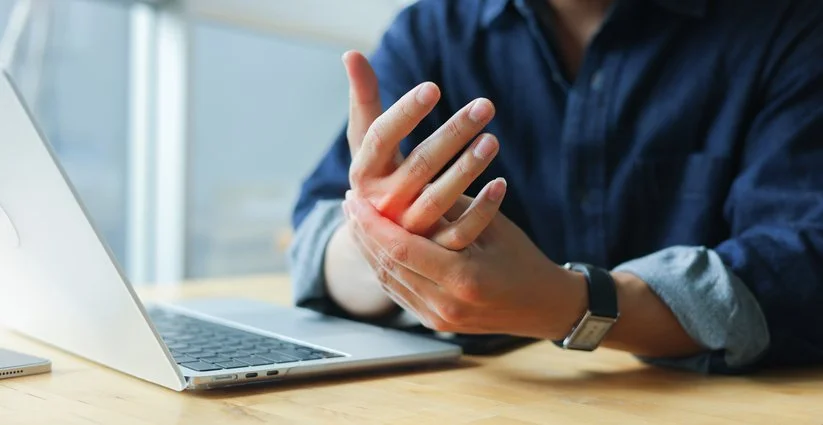
If you spend a significant part of your day typing, scrolling, gripping, or working with your hands, you may already be familiar with the warning signs. A tingling in the fingers that shows up after a long session at the keyboard. Numbness in the palm or thumb that wakes you up at night. Aching in the wrist that lingers after you have put the work down. A gradually increasing sense that your hands are not quite recovering the way they used to between sessions.
Carpal tunnel syndrome is one of the most common nerve-related conditions affecting people who work with their hands, and it is particularly prevalent among the large population of tech workers, designers, writers, musicians, and creative professionals living and working in communities like Playa Vista, Culver City, Santa Monica, West Los Angeles, and Marina Del Rey. The symptoms are real, and they deserve to be taken seriously. But one of the most important things to understand about carpal tunnel-related discomfort is that the wrist is often not the only place, or even the primary place, where the problem originates.
At Hannah Sprung Rolfing LA in Marina Del Rey, CA, hand and wrist pain is approached from a whole-body perspective. Through Rolfing® and Structural Integration, Hannah helps people look at the larger patterns of tension and compression that may be contributing to nerve irritation in the hand and wrist, so that relief can be more complete and more lasting. For people seeking carpal tunnel relief in Marina Del Rey, CA and surrounding Westside communities, understanding why the chain matters can be the first step toward real change.
As with all nerve-related conditions, carpal tunnel syndrome can have multiple contributing factors and should be evaluated by a qualified healthcare provider. Rolfing® is not a medical treatment and is not a substitute for proper diagnosis or care. What it may offer is a complementary whole-body approach to the structural and fascial patterns that contribute to compression and nerve irritation along the pathway from the neck to the hand.
What Carpal Tunnel Syndrome Actually Involves
The carpal tunnel is a narrow passageway in the wrist formed by bones and ligaments, through which the median nerve and several tendons travel into the hand. When the tissues within or around that tunnel become compressed or inflamed, the median nerve can be affected, producing the characteristic symptoms of tingling, numbness, and pain in the thumb, index finger, middle finger, and part of the ring finger.
What is less commonly discussed is that the median nerve does not begin at the wrist. It originates from nerve roots in the cervical spine, travels through the neck, passes through the shoulder and armpit, runs along the inner arm, crosses the elbow, continues through the forearm, and then enters the hand through the carpal tunnel. Along that entire path, the nerve can be compressed, restricted, or irritated by tight muscles, restricted fascia, poor posture, and structural tension. When compression occurs at multiple points along the pathway, the symptoms at the wrist can be significantly amplified even if the carpal tunnel itself is only mildly involved.
This is sometimes referred to as a double crush phenomenon, where nerve irritation at one point along the pathway lowers the threshold for irritation at another. It is one of the key reasons why addressing only the wrist may provide incomplete relief for people whose symptoms are also being driven by tension and compression higher up the chain.
Where the Tension Often Starts
At Hannah Sprung Rolfing LA, working with hand and wrist pain almost always involves looking carefully at the neck, shoulders, chest, and upper arm, because these are the areas where tension most commonly accumulates and begins to affect the nerve pathway traveling into the hand.
Forward head posture is one of the most significant contributors. When the head sits forward of the shoulders for sustained periods, which is the default position for most people doing desk work, screen work, or detailed hand tasks, the cervical spine comes under increased compressive load. The nerve roots that give rise to the median nerve exit through the cervical vertebrae, and when that region is chronically compressed or restricted, the downstream effects can be felt all the way into the fingers.
Rounded shoulders and a restricted chest are closely related to this pattern. When the pectoral muscles are short and tight, the shoulder girdle rolls forward, narrowing the space through which nerves and blood vessels travel from the neck into the arm. This is the region associated with thoracic outlet patterns, and it can contribute to tingling, heaviness, and nerve sensitivity in the arm and hand even before the signal reaches the wrist.
Elbow and forearm tension is another common layer. People who grip, type, or perform repetitive fine motor tasks for long hours often develop chronic tightness in the forearm flexors, which can create additional compression along the nerve pathway as it approaches the wrist. The elbow is also a site where the median nerve can be compressed, and ongoing tension in the muscles surrounding the elbow can add to the overall burden the nerve is managing.
By the time symptoms appear at the wrist, the nerve may already be dealing with restricted movement and mild compression at the neck, shoulder, chest, and elbow. Addressing only the wrist in that context often produces limited or temporary relief because the contributing sources of tension remain in place.
The Role of Fascia in Hand and Wrist Pain
Fascia surrounds and supports every structure the median nerve passes through on its journey from the neck to the hand. When the fascial environment along that pathway becomes restricted, whether from repetitive movement, postural habits, stress, or accumulated tension, it can narrow the space available for the nerve and the structures traveling alongside it.
This is one reason why whole-body fascial work through Rolfing® and Structural Integration can offer something that more localized wrist treatment may not. When the fascia of the chest, shoulder, upper arm, and forearm is given the opportunity to release and reorganize, the nerve pathway as a whole becomes less compressed. The wrist may still benefit from direct attention, but the work upstream can meaningfully change the conditions the nerve is living in by the time it arrives there.
How Rolfing® May Help
At Hannah Sprung Rolfing LA in Marina Del Rey, working with carpal tunnel-related symptoms involves a thorough assessment of posture, alignment, and how the whole upper body is organized. Hannah looks at head position, shoulder girdle placement, chest and rib mobility, and how the arms are relating to the rest of the body before focusing on the forearm and wrist directly.
She works with the fascia and connective tissue through the neck, shoulders, chest, upper arm, forearm, and wrist using pressure that is appropriate for each area and responsive to what the body is ready for. The goal is to reduce the overall compression burden along the nerve pathway, give the surrounding tissues more ease and space, and help the body find a more supported structural arrangement that puts less ongoing demand on the hand and wrist.
Hannah may also bring attention to movement habits and body awareness during sessions, helping clients notice how they are holding their arms, shoulders, and neck during work and daily tasks. Small adjustments in how the upper body is organized and supported can have a meaningful cumulative effect on how much strain the wrist and hand are absorbing over hours of repetitive use.
For people seeking carpal tunnel relief in Marina Del Rey, CA, this approach can feel meaningfully different from splinting, stretching the wrist alone, or waiting to see if symptoms improve with rest. When the whole pathway is considered and the structural contributors are addressed, the potential for longer-lasting relief is significantly greater.
Who This May Be a Good Fit For
A whole-body approach to hand and wrist pain tends to resonate with people whose symptoms feel connected to posture, work habits, or a pattern of upper body tension. It may be worth exploring if you:
Experience tingling, numbness, or aching in the hand, wrist, or fingers that is associated with prolonged desk or screen work
Notice your symptoms are worse after long keyboard sessions, driving, or gripping tasks
Deal with neck tension, shoulder tightness, or upper back strain alongside your hand and wrist symptoms
Have tried wrist splints, stretching, or rest without finding lasting relief
Work in tech, design, writing, music, or another field that involves sustained fine motor or computer work
Feel like the tension in your hands and wrists is part of a larger pattern of upper body strain
Clients come to Hannah Sprung Rolfing LA from Marina Del Rey, Venice, Playa del Rey, Playa Vista, Santa Monica, Culver City, West Los Angeles, and throughout the greater Los Angeles area, many of them in demanding professional and creative roles where hand and wrist health is essential to their work and quality of life.
Why Looking Up the Chain Matters
The hand and wrist are at the end of a long and complex pathway. Everything that happens above them, in the neck, shoulders, chest, and arm, shapes the environment those structures are working in. When the whole pathway has more ease, when the nerve has more room, and when the tissues around it are less compressed and restricted, the hand and wrist often have significantly less to manage on their own.
This is why the Rolfing Ten-Series® can be especially valuable for people dealing with carpal tunnel-related symptoms. The Ten-Series works through the whole body progressively, dedicating significant attention to the upper body, shoulder girdle, neck, and arms in the context of the whole structure. Rather than continuing to manage symptoms at the wrist, the goal is to help the body find a new structural baseline where the entire upper extremity pathway has more support, more space, and more ease.
Ready to Address the Whole Pattern?
If you are looking for carpal tunnel relief in Marina Del Rey, CA and feel like addressing the wrist alone has not given you the lasting improvement you are looking for, a whole-body approach through Rolfing® and Structural Integration may offer a more complete path forward. Hannah Sprung Rolfing LA works with people throughout Marina Del Rey, Venice, Playa del Rey, Playa Vista, Santa Monica, Culver City, West Los Angeles, and the broader Los Angeles area who are ready to look at the bigger picture and find more lasting ease in their hands, wrists, and upper body.
Schedule an appointment with Hannah Sprung Rolfing LA at 3121 Washington Blvd, Marina Del Rey, CA 90292 and take the next step toward less tension, more ease, and hands that can keep doing the work you love.